
The “Heart” of Pharma Equipment: Why Rapid Mixer Granulators Make Solid Dosage Production So Efficient
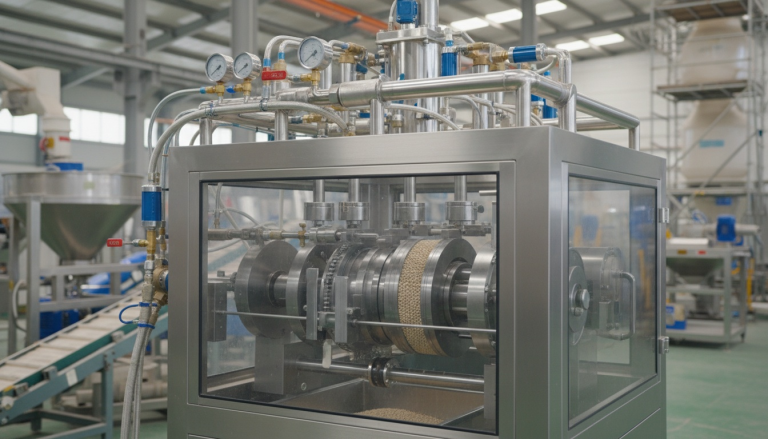
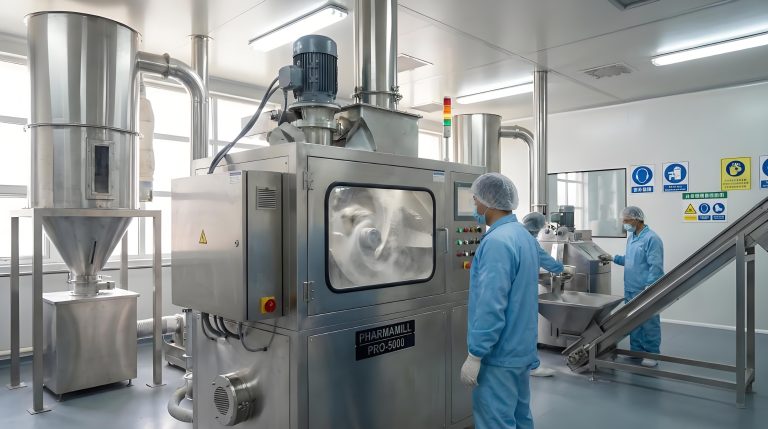
I walked into a pharma factory for the first time. I saw this huge Rapid Mixer Granulator (RMG). I thought it was just a regular mixer. The plant manager told me something surprising. “This machine processes 500 kilos per hour. It controls our entire production line’s efficiency.” That’s when I realized this metal box was actually an industry game-changer.
Let’s talk about this equipment today. We’ll look at technical insights from Quora. We’ll check out real complaints from Reddit pharma workers. We’ll see why RMG matters so much. We’ll explore how Solid Dosage Equipment Manufacturers master this technology.
Part One: What Exactly Is an RMG? Just a Big Mixer, Right?
The Quora Professional View
A formulation scientist with 15 years’ experience answered a Quora question. The question was “What makes Rapid Mixer Granulator essential in pharmaceutical manufacturing?” He explained something important.
“RMG’s core value isn’t ‘mixing.’ It’s about ‘one-step completion.’ Traditional methods need separate mixing, liquid adding, and granulating. These happen in different machines. RMG does everything in one sealed container. It takes 10-15 minutes. Efficiency doesn’t increase by 30%. It increases by 300%.”
He added a technical detail. RMG’s high-speed blades spin at 300-500 rpm. The slow chopper runs simultaneously. This “hard and soft” combination works perfectly. It creates uniform granules from moistened powder quickly. It prevents clumping or over-breaking.
Reddit’s Real Battlefield
Reddit’s r/pharma community shows a different picture. One post title reads: “RMG operator here. This machine is both a blessing and a curse.”
This guy’s complaints are interesting:
- “Cleaning is a nightmare. After each production run, you disassemble everything. Blades, choppers, screens all need hand-washing. It takes at least 2 hours. If the previous batch had sticky material, expect 4 hours minimum.”
- “But I admit, product consistency is solid. We once switched RMG suppliers. Particle size distribution jumped from D50=500μm to 700μm. We almost scrapped the entire batch.”
You see the gap between theory and practice? Engineers praise efficiency. Workers complain about cleaning. But both sides agree: they can’t work without it.
Part Two: Why Does Pharma Rely So Much on RMG? Because Solid Dosage Is an “Architecture” Art
Pain Point One: Direct Powder Compression? That’s Gambling
A top Quora answer mentions something counterintuitive:
“Most APIs (active pharmaceutical ingredients) can’t be directly compressed into tablets. They’re either too fine and cause segregation. Or they’re too coarse and won’t flow into the die cavity uniformly.”
This means drug active ingredients are problematic. Too fine causes separation. Too coarse won’t fill molds properly. Granulation becomes essential. It turns fine powder into 0.5-2mm granules. This ensures flowability. It controls release speed.
RMG’s advantage is doing multiple things simultaneously:
- Uniform binder distribution (through high-speed mixing)
- Precise granule size control (through chopper cutting)
- Rapid moisture evaporation (sealed environment with vacuum drying option)
A quality engineer on Reddit shared a case. They used traditional wet granulation before. They added liquid in a trough mixer, then screened. Every batch showed different dissolution curves. FDA auditors questioned their “process stability.” After switching to RMG, RSD (relative standard deviation) dropped from 12% to under 3%.
Pain Point Two: Time Is Money, Especially in GMP Facilities
This reminds me of something important. Pharma’s “time cost” isn’t calculated hourly. It’s calculated by minutes.
A process engineer on Quora did the math:
- Traditional three-step method (mixing 30min + granulation 20min + drying 60min) = 110 minutes
- RMG one-step method (mixing+granulation 15min + in-situ drying 30min) = 45 minutes
Seems like saving one hour? But in GMP environments, reducing one transfer step means:
- One less cross-contamination risk
- One less batch record document (you know, pharma paperwork…)
- One less cleaning validation dataset
A Reddit comment made me laugh: “We calculated that switching to RMG saved us 200 hours of paperwork per year. That’s basically one QA person’s salary.”
Part Three: RMG Isn’t Perfect – Common Pitfalls to Avoid
Pitfall One: Not All Materials Suit “Rapid” Processing
A pharmaceutical sciences PhD on Quora warns:
“Heat-sensitive or shear-sensitive materials can degrade in RMG. The high-speed impeller generates friction heat. If your API melts at 60°C, you’re in trouble.”
This is accurate. Someone on Reddit shared a disaster story. They produced a vitamin formulation. RMG speed was too high. Vitamin C oxidized 20% during granulation. They recalled the entire batch.
Solutions exist though:
- Lower blade speed (but extends time)
- Use cooling jackets (but increases equipment cost)
- Use organic solvents instead of water (but raises environmental and safety risks)
This shows why choosing reliable Solid Dosage Equipment Manufacturers matters. Good manufacturers customize blade design based on material properties. They optimize liquid addition systems. They even offer PAT (Process Analytical Technology) integration. This monitors temperature and particle size in real-time.
Pitfall Two: Scale-Up Production’s “Unexpected Surprises”
This topic generates hot Reddit discussions. One post title reads: “Lab-scale RMG works perfect. Production-scale is a disaster. WTF?”
Lab’s 10L equipment and production’s 300L equipment differ physically. They’re both called RMG. But physical laws change:
- Small equipment lets powder fully contact blades. Large equipment may have “dead zones.”
- Small batches need 5 minutes liquid addition. Large batches might need staged addition. Otherwise, the bottom becomes muddy while the top stays dry.
A process development expert on Quora advises: “Never scale up linearly by volume. Use dimensionless numbers like Froude number to match blade speed. Use power density to control shear force.”
In plain English: don’t simply multiply lab formulas by 30. You must recalibrate parameters.
Part Four: Future Trends: RMG Is Getting “Smarter”
From “Manual” to “Automatic”
A recent Reddit hot post reads: “Newest RMG at our site has AI-based endpoint detection. No more guessing when granulation is done.”
Traditional RMG operation relies heavily on experience. Master operators listen to motor sounds. They watch power curves. They judge if granules formed properly. But new-generation equipment integrates:
- Real-time particle size analysis (through laser sensors)
- Moisture content monitoring (NIR near-infrared spectroscopy)
- Adaptive control (if granules are too fine, automatically extends mixing time)
Someone on Quora asked: “Does this mean we don’t need experienced operators anymore?”
A pharma veteran’s answer is clever: “Technology makes things more consistent. But you still need someone who understands WHY things go wrong.”
Modular Design: Multi-Purpose Machines Aren’t Dreams
Another trend is equipment “Lego-fication.” Some Solid Dosage Equipment Manufacturers offer interchangeable blade systems. Same RMG, different blade shapes. It can process high-viscosity pastes to low-density loose powders.
This attracts small-to-medium pharma companies especially. A CMO (Contract Manufacturing Organization) procurement manager on Reddit says: “We can’t afford 5 different granulators for 5 products. A modular RMG lets us stay flexible without breaking the bank.”
Part Five: How to Choose RMG? Avoid These Traps
After reading all this, you might wonder: lots of RMG brands exist. How do you choose?
Combining Quora and Reddit discussions, here are key points:
1. Don’t just look at price, check TCO (Total Cost of Ownership)
- Cheap equipment maintenance costs can be astronomical (one imported seal costs $500)
- Energy consumption varies greatly (some equipment motors use 1.5x the power)
2. Confirm manufacturer’s after-sales support
Reddit shares a painful lesson: “Bought a RMG from an Indian vendor. Machine is great. But getting spare parts takes 6 months. Production stopped twice because of a $50 seal.”
3. Require on-site testing (trial run)
Many Solid Dosage Equipment Manufacturers offer “material testing” services. Take your formulation to their lab. Run it once. See the results. This beats reading spec sheets a million times.
4. Focus on cleaning convenience
Someone on Quora made a specific comparison. One brand’s RMG has quick-release blades. You can remove them in 10 minutes. Another brand requires removing 18 screws. Which would you choose?
Conclusion: Equipment Is Just a Tool, Understanding Is Key
Writing this reminds me of something else the plant manager said: “Even the best RMG can’t save a bad formulation.”
This is true. Rapid Mixer Granulators are pharma’s efficiency engines. But they’re not magic wands. You need to understand material physical and chemical properties. You must know process parameter relationships. You need reliable equipment suppliers backing you up. Especially experienced Solid Dosage Equipment Manufacturers.