
Why High-Efficiency Film Coating Machines Now Dominate Pharma and Food Production
Film Coating Machine — it basically dresses your tablets.
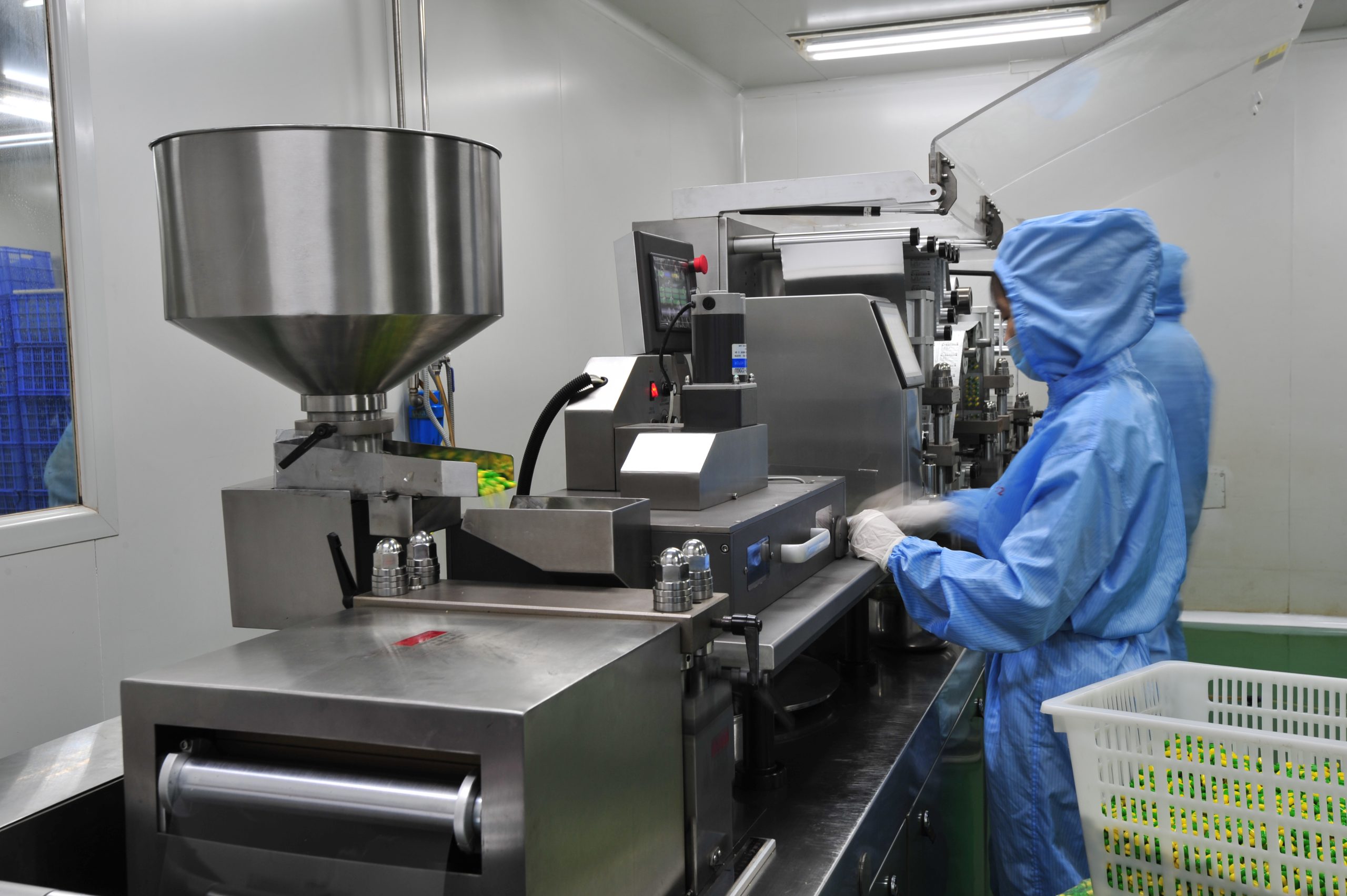
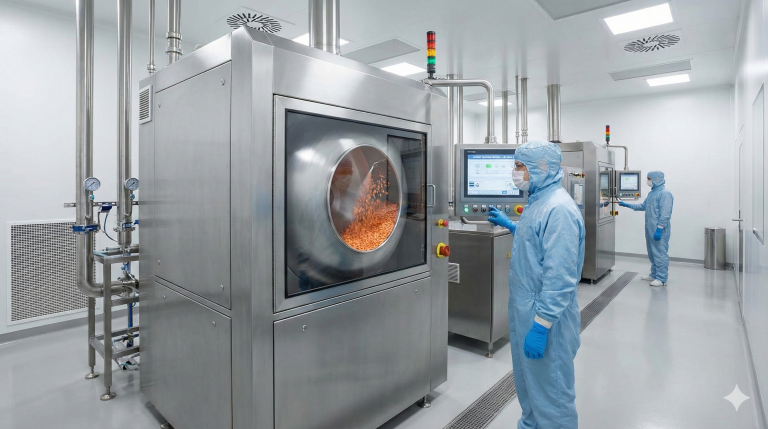
Tablets tumble inside a rotating drum. Spray guns mist polymer coating onto them. Hot air dries everything fast. You get a thin film on every tablet.
Sounds simple. Just makes pills “look nicer” or “easier to swallow,” right?
Wrong. In real production, this coating controls:
- Stability — blocks moisture, oxygen, and light
- User experience — masks bitter taste, improves appearance, enables color-coding
- Release profiles — delivers immediate, sustained, or enteric release
- Regulatory approval — determines dissolution consistency and bioequivalence success
Here’s the real problem: Same machine. Same process. One factory hits stellar yield rates. Another battles chipping, color variations, and tablet sticking constantly.
The difference?
Most companies buy the Film Coating Machine as equipment. They don’t operate it as a process platform.
Think it’s just “a spinning pan + spray guns + hot air”? Competitors who master process control will crush you within five years.
What Film Coating Actually Transforms
1. Equipment Surface VS Process Reality
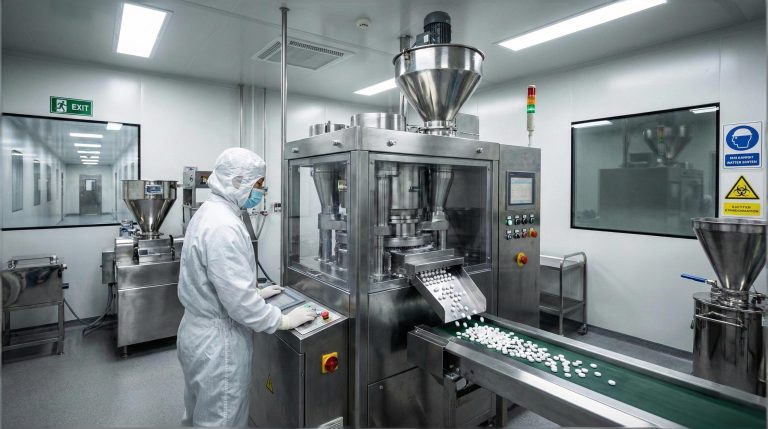
A typical film coating machine has four core systems:
- Rotation system — perforated drum with baffles keeps tablets tumbling and exposes fresh surfaces
- Spray system — spray guns, peristaltic pumps, and gun positioning atomize coating solution precisely
- Drying system — inlet air, exhaust, heating, and airflow design removes solvent fast
- Control system — PLC or touchscreen manages spray rate, drum speed, temperature, airflow, and humidity
The textbook explanation?
Tablets tumble in a sealed drum. Coating sprays evenly. Hot air removes solvent. A uniform film forms.
Every machine sounds the same. But three dimensions separate winners from losers:
- Uniformity — Can you control coating frequency and thickness on every tablet face?
- Drying efficiency — Can solvent evaporate fast without “hot spots” causing cracks or burns?
- Scalability — Can lab results replicate at pilot and commercial scale?
Film Coating Machines don’t just answer “can we coat?” They answer “can we coat predictably, consistently, and traceably?”
2. Why Film Coating Becomes the Hidden Dividing Line
My prediction: Film Coating Machines become a capability filter in pharma, supplements, and food within 3–5 years.
- Master coating differentiation (appearance, taste, release)? You win.
- Build a verifiable, traceable, improvable process platform? You stay stable.
Here’s why:
A. Regulatory Pressure Keeps Rising
Modern drug regulations demand consistency for oral solid doses:
- Authorities check dissolution curve shapes and batch-to-batch variation — not just average content
- Any coating defect (uneven thickness, local damage) shows up as dissolution variability
Film Coating shifted from “cosmetic step” to “functional critical process.” Your equipment and controls face regulatory scrutiny.
B. Product Competition Gets Tougher
OTC drugs, supplements, and nutraceuticals face demanding consumers:
- Colors must match. Gloss must shine. No spots. No “spray pattern” defects.
- No bitterness. No stickiness. Smooth swallowing.
- Brand colors must stay identical. Visual trust matters.
All these requirements land on coating formulation + machine spray and drying performance. Still using 1990s pan coaters with manual guesswork? You’re already behind.
C. Scale-Up Kills the Unprepared
Many companies nail small-batch development. Then 200kg or 400kg production batches explode with problems:
- Higher flow rates cause sticking and tablet loss
- Uneven drying leaves residual solvent trapped inside
- Hot spots degrade heat-sensitive ingredients or damage cores
The root cause? You never treated the Film Coating Machine as a scale-up engineering challenge.
D. Digitalization Changes Everything
Modern coaters aren’t just buttons and thermometers:
- Automatic recipe recall and electronic batch records
- Full curve display of speed, airflow, inlet/outlet temps, and spray rates
- MES and DCS integration for complete data integrity
Whoever connects equipment to digital systems first locks in process knowledge. They stop depending on “old master” experience.
Where Film Coating Machines Are Headed
Prediction 1: Perforated Drums + Precision Spray + Sealed Airflow Replaces “Good Enough” Equipment
Flat-bottom pans and poorly designed air systems will disappear fast. High energy costs. Low efficiency. Poor consistency. Can’t handle complex sustained-release or enteric coatings.
Don’t upgrade now? Your product portfolio gets limited by outdated equipment.
Prediction 2: Coating Moves from “Back-End Step” to “Front-End Design Parameter”
Old approach: finish formulation, then figure out coating. Future approach: release curves, stability, and appearance get locked to equipment capability at project kickoff.
R&D teams will join equipment selection early. Products launch stable from day one.
Prediction 3: Equipment Becomes “Process Know-How Carrier” — Not Just an Asset
Competitive companies won’t sell “a machine.” They’ll sell “equipment + process package.” Factories with machines but no process knowledge become low-margin contract manufacturers.
What This Means for You
1. If You Run a Pharma or Supplement Factory
- Coating capability determines which complex products you can handle
- New equipment investment buys future production licenses and product ceilings
2. If You’re a Process or Equipment Engineer
- Becoming a key technical leader requires deep understanding of coating variables (airflow, pressure differential, atomization)
- Treat equipment as a controllable system. Your career leverage grows.
3. If You’re an Equipment Supplier
- Selling metal boxes is over. Deliver typical formulation templates, scale-up strategies, and troubleshooting guides.
- Become a “process platform with documentation” supplier.
4. If You’re a Small Business Without Coating Equipment Yet
- Wait a few more years? High-value product categories may close their doors to you.
- Better to start with small-capacity, high-capability perforated coaters than pile up large-tonnage “dumb equipment.”
Your Action Plan
- Strategy 1: Define “what you’ll coat” before selecting equipment. Immediate release or controlled release? MES integration needed? Let requirements drive specs.
- Strategy 2: Build your “parameter–phenomenon–conclusion” dictionary. Document every batch detail. Convert personal experience into organizational knowledge.
- Strategy 3: Simulate industrial scale during small-batch trials. Don’t rely on tricks that won’t work on large machines.
- Strategy 4: Talk process with suppliers, not just price. Ask about customer cases and scale-up experience. Are they selling metal or solutions?
- Strategy 5: Start digitalization now. Record drum speed, spray curves, and inlet/outlet temperatures for every batch. Future compliance demands this.
Conclusion
A Film Coating Machine looks like equipment. It’s actually a dividing line.
You can treat it as a “don’t screw up” back-end step. Or you can wield it as a combined weapon of product design + process capability.
Whoever builds systematic coating expertise first gets a ticket to the next round of competition.