
5 Hidden Costs Sugar Coating Equipment Manufacturers Won’t Tell You About
Introduction: A 20-Hour Marathon
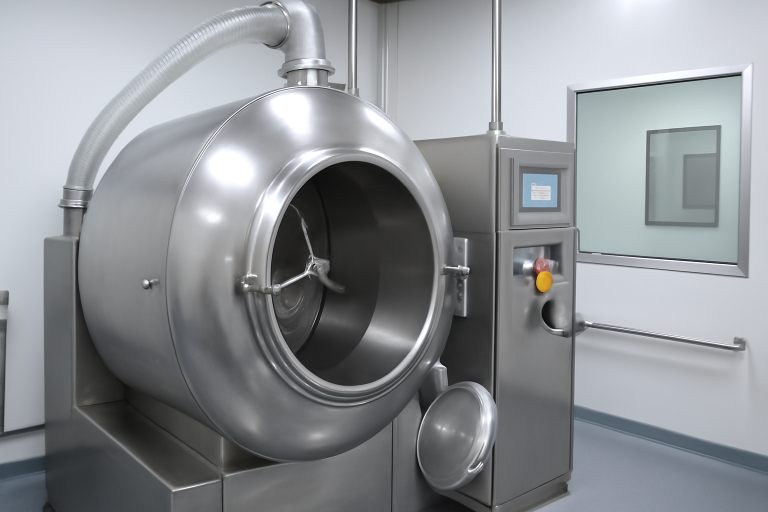
You know what? A smooth, perfectly round sugar-coated pill might need to tumble in a coating machine for a full 20 hours. Sounds crazy, right? But that’s an under-discussed reality in pharma manufacturing.
Recently, discussions about sugar coating machines exploded in Quora and Reddit pharmaceutical engineering circles. Some call it “pharma’s dinosaur.” Others insist it’s still irreplaceable. What industry secrets lie beneath?
When “Perfectionism” Meets Imperfect Reality
In a Reddit discussion, a pharma engineer shared his painful experience. “Our sugar coating machine screwed up again. Pills started blistering, cracking, sticking together. Like following a cake recipe and still bombing it.”
That comparison hits hard. Sugar coating theory sounds simple. Wrap pills in a sweet outer layer. Make them look better, easier to swallow. But in reality? It’s like walking a tightrope.
Common “crash” scenarios include:
- Chipping: Coating flakes off like old wall paint
- Twinning: Pills stick together like conjoined twins
- Blooming: White spots appear on surface, looks moldy
- Marbling: Uneven color distribution, all patchy and colorful
A technical expert with 15 years at a Pharmaceutical Equipment Manufacturer admitted on Quora: “Every time I see these issues, I wonder: Why are we still using 19th-century technology?”
Sugar Coating Machines: Pharma’s “Stubborn Holdout”
True, most pharma companies switched to film coating now. Faster, cheaper, fewer problems. But sugar coating stays put like pharma’s “nail house.” Stubbornly refusing to leave.
Why?
One Reddit user’s answer stuck with me. “Some old drugs just need sugar coating. Not because the tech is backward. But because patients got used to that taste, that appearance. You dare change it randomly?”
Fair point. Imagine if a cold medicine you’ve taken since childhood suddenly changed packaging and taste. Wouldn’t it feel wrong? In pharmaceuticals, that “wrongness” might affect patient treatment compliance.
Plus, sugar coating genuinely has advantages in special cases:
- Better taste masking: Some extremely bitter drugs, film coating can’t suppress the taste
- Stronger protection: Thick sugar coating shields the drug core like armor
- Psychological effect: Patients feel “sugar-coated pills” are gentler
Those “Invisible” Technical Pitfalls
In pharma forums, people constantly complain about sugar coating’s technical difficulties. The worst part? Unpredictability.
An experienced operator shared on Quora: “Same formula, same equipment, same environment. Sometimes you just can’t get the same results. Humidity slightly higher, temperature slightly lower. The entire batch might be ruined.”
Reminds me of that old saying. Pharma is science and art. Sugar coating leans more toward the latter.
Most headache-inducing technical issues:
- Moisture control: High humidity causes sticking, low causes cracking
- Temperature gradient: Heat too fast and coating blisters. Too slow kills efficiency.
- Spray uniformity: Slight unevenness creates color differences
- Drying time: Each layer must dry completely. Otherwise, endless problems later.
One pharma engineer said with a bitter smile: “We spent millions on cutting-edge equipment. Still rely on old masters’ experience and feel.”
Cost Reality: Looks Cheap, Actually Expensive
On the surface, sugar coating raw materials are dirt cheap. Sucrose, water, a bit of coloring. Cost is almost negligible. But where does the real cost hide?
Time cost: 20 hours processing means what? Equipment occupation, labor costs, energy consumption. All real expenses.
Labor cost: Sugar coating needs professional operators. Such talent grows scarcer. In a Reddit discussion, someone said: “Our factory’s sugar coating master is retiring soon. New people can’t learn it. Really worried.”
Scrap cost: High failure rate means more waste. Pharma waste disposal ain’t cheap.
Opportunity cost: Same equipment and manpower doing film coating could produce how many times more?
Talent Crisis: Inheritance vs Innovation Contradiction
In a Reddit post about pharma career development, one detail really touched me. A graduating chemical engineering student said: “I’m interested in pharma. But heard everything’s automated now. Still need to learn these traditional processes?”
An old engineer replied below: “You think automation doesn’t need people? Machines can follow programs. But when problems arise, still need humans to judge and solve.”
This captures pharma’s current awkwardness:
- Old tech needs fresh blood: But young people prefer learning new tech
- Automation levels rising: But critical moments still need experience
- Standardization demands increasing: But sugar coating inherently resists standardization
An interesting phenomenon: Some Pharmaceutical Equipment Manufacturers started launching “semi-automated” sugar coating machines. Trying to balance traditional craft and modern tech. But effectiveness? Market’s still watching.
Final Thoughts: How Long Must We Carry This Sweet Burden?
The sugar coating machine story actually mirrors the entire pharma industry’s transition period. New tech keeps emerging. But traditional processes still hold value. The question is: How do we embrace tech progress while keeping traditional advantages?
Maybe the answer isn’t simple “eliminate” or “preserve.” It’s finding balance. Like engineers discussing on Reddit said: “Tech advances. But some things’ value can’t be measured by efficiency alone.”
After all, behind every smooth sugar-coated pill stand countless pharma professionals’ persistence and effort. This “sweet burden”? Might need carrying for a long, long time.