
Bilayer Tablet Production: Lessons from Million-Dollar Equipment
I saw an interesting discussion online recently. A pharmaceutical company spent over a million on the latest bilayer tablet press. Their first production batch separated like sandwich cookies. A light touch split them into two layers. The technical director smiled bitterly. “Why doesn’t perfect theory work on the production line?”
This story reminded me of bilayer tablet technology today. On the surface, it looks great. Press two different drug components into layers in one tablet. This achieves combination therapy. It also controls different release speeds. Sounds like a perfect solution. But digging deeper reveals the truth. Manufacturing bilayer tablets is far more complex than imagined.
Delamination: The Problem That Never Goes Away
Check pharmaceutical forums and academic discussions. The word “delamination” appears surprisingly often. Almost every engineer working with bilayer tablet production has similar nightmare experiences.
The root problem lies in physical property differences between layers. An experienced formulation engineer shared on ResearchGate: When layer one uses plastic deformation material and layer two uses brittle material, problems arise. Elastic modulus differences cause different rebound forces during compression. This “elastic mismatch” creates radial stress at the interface. This ultimately causes poor bonding strength.
Worse still, delamination doesn’t just happen during compression. It can occur during packaging, transport, or even storage. Some pharmaceutical plants faced this situation: Production went smoothly. But products sat in warehouses for months. Then spot checks found delamination rates suddenly spiked.
Interface Bonding Strength: The Invisible Battlefield
If delamination is the symptom, interface bonding strength is the core issue. You can’t see it or touch it. But it determines product success or failure.
Modern tablet press machines handle this mainly through compression force control and formula optimization. For example, add “plastic diluents” to both layer materials. Or adjust moisture content to enhance particle interactions. But these methods require repeated trials. No standardized solutions exist.
Interestingly, punch shape also affects bonding strength. Convex punches work better than concave ones. Convex surfaces increase contact area between adjacent layers. Such details are “secrets” only experienced operators know.
Equipment Selection: Expensive Doesn’t Mean Better
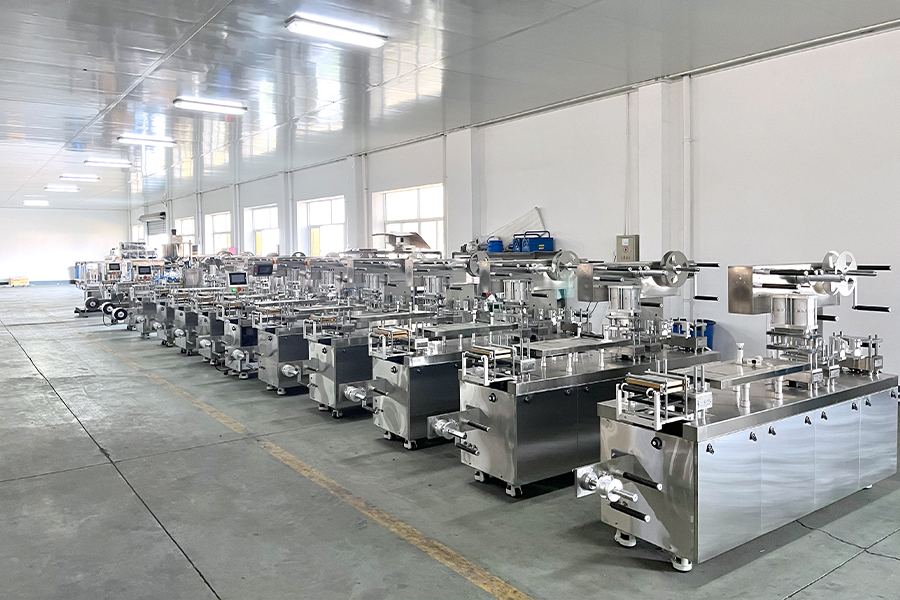
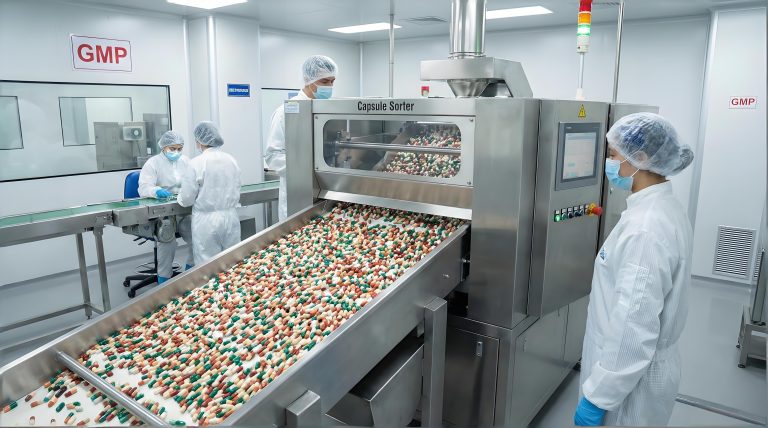
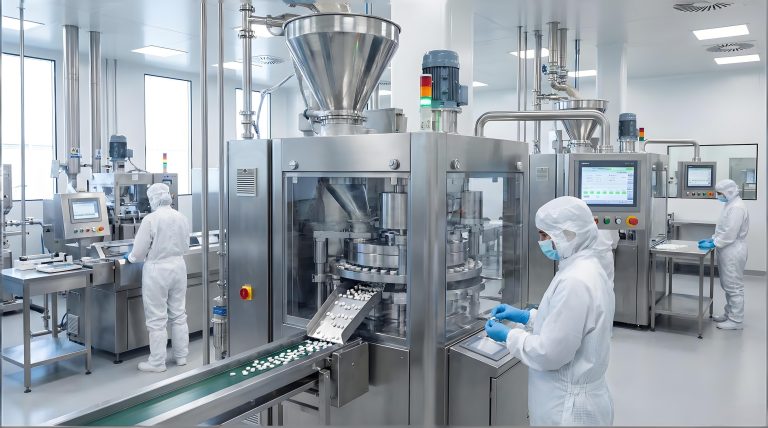
Equipment selection for bilayer tablet production requires careful consideration. Solid dosage equipment manufacturers offer countless solutions. From single-sided to double-sided compression. From traditional mechanical to intelligent control. Price differences are huge.
But reality is harsh. Even the most advanced equipment can’t solve all problems. Single-sided presses cost less. But they have obvious defects in weight control and cross-contamination prevention. Double-sided presses have powerful functions. But their operational complexity and maintenance costs increase accordingly.
An engineer with 15 years in pharmaceutical equipment told me something important. When choosing equipment, don’t look at how advanced the parameters are. Consider your product characteristics and production scale. “Some small-batch production companies spend big money on high-end equipment. Most functions go unused. Pure waste.”
Quality Control: The Gap Between Theory and Practice
Quality control for bilayer tablets is much more complex than single-layer tablets. Besides regular indicators like weight variation, hardness, and disintegration time, you must test specialized parameters. These include interlayer bonding strength, layer thickness ratios, and drug content uniformity.
More troublesome is how these parameters affect each other. Increasing compression force strengthens bonding. But it may affect disintegration performance. Adjusting layer thickness ratios can improve drug release curves. But it may cause weight control difficulties.
This often happens in actual production: Same raw material batch. Same equipment parameters. But products from different production times show obvious quality differences. Humidity, temperature, and raw material batch variations can all become “invisible killers.”
Cost-Effectiveness: Great Ideals Meet Harsh Reality
From a business perspective, bilayer tablet technology has advantages. It can combine two drugs requiring separate doses into one tablet. This improves patient compliance. It also provides new patent protection avenues for existing drugs.
But manufacturing cost increases are obvious. Beyond equipment investment, there are higher waste rates. More complex process validation. Stricter quality control requirements. Industry insiders estimate bilayer tablet manufacturing costs are typically 1.5-2 times those of equivalent single-layer tablets.
For some generic drug companies with thin profit margins, this cost increase may be unbearable. So we see bilayer tablet technology mainly applied in innovative drugs and high-end generics.
Technical Innovation: Where Is the Hope for Breakthrough?
The good news is the industry hasn’t stopped exploring. 3D printing technology is emerging in bilayer tablet manufacturing. Layer-by-layer printing can precisely control composition and thickness of each layer. Theoretically, it can completely avoid delamination problems from traditional compression methods.
There’s also “Glued Tablet Technology” (GPT). First compress two tablet layers separately. Then bond them with special adhesive. This method adds one process step. But it greatly reduces waste rates. In certain application scenarios, it’s actually more economical.
Nanotechnology applications are also eye-opening. Making poorly soluble drugs into nanoparticles not only improves solubility. It also reduces interactions with the other drug layer. This provides more possibilities for bilayer tablet formulation design.
Final Thoughts
Back to the technical director’s confusion at the start. Bilayer tablet technology is indeed a typical case of “great ideals meeting harsh reality.” It represents a direction for pharmaceutical technology development. But for true mature application, continuous breakthroughs are needed. These include material science, equipment engineering, and process optimization.
Perhaps this is the necessary path of technological progress. From perfect laboratory theory to real factory floor tests. Then to comprehensive market application verification. Every step is full of challenges. But these challenges also drive the entire industry forward.
For companies considering introducing bilayer tablet technology, my advice is: Don’t be fooled by theoretically perfect solutions. Don’t be deceived by equipment supplier promotional materials. Start with small-scale trials. Fully understand your product characteristics. Then gradually expand application scope. After all, technology that suits you is the best technology.