
Comprehensive Analysis of Automated Powder Feeding Systems
An Industry Pain Point Nobody Talks About
Industrial automation? Most people think robots, AI, big data. Fair enough.
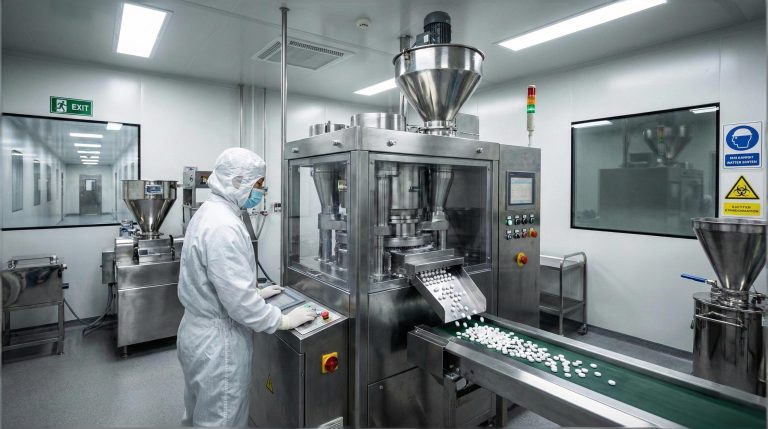
But on production lines in pharma, plastics, and chemicals, something crucial gets overlooked. Powder loading. And it’s going through a massive transformation.
This isn’t some hot new concept. Engineers tackled this problem decades ago. The challenge? Moving powders, granules, or regrind from storage into production equipment. Efficiently. Accurately.
The old way? Manual pouring, weighing, loading. Slow. Error-prone. Serious health risks for workers.
Automatic Powder Loaders changed everything.
Core Technology: Simple Concept, Complex Execution
The principle sounds straightforward. Vacuum or pneumatic systems move free-flowing materials through conveying tubes into machine hoppers.
But people underestimate the technical complexity.
Why Is Powder So Tricky?
Powder isn’t liquid. It isn’t quite solid either. Physical properties vary wildly. Some powders are fluffy and static-prone. Others are dense with strong flowability. Some are crystalline with irregular shapes. Others absorb moisture and clump.
These traits affect weighing accuracy, conveying efficiency, and equipment lifespan.
Modern automatic powder loaders tackle these challenges through key innovations:
- Multi-Stage Centrifugal Pump Systems
Three-stage centrifugal motors adjust suction strength based on material properties. No over-compression. No structural damage. For delicate materials like specialty pharma ingredients, this is non-negotiable for quality. - High-Efficiency Reverse Pulse Valve Design
High-flow reverse pulse valves with acrylic or mesh flat filters enable continuous self-cleaning. Equipment lifespan extends dramatically. These machines become production workhorses, not disposable tools. - Material Demand and Level Sensors
Smart sensing determines when to start and stop. No human intervention needed. Equipment transforms from passive tool to active participant. - Precise Flow Control
Standard units handle 1,000 lbs/hour (about 454 kg/hour). Impressive for small to mid-sized lines. More importantly, flow is highly adjustable. Operators fine-tune parameters in real-time through control menus.
What Does This Mean For You?
Working in manufacturing, pharma, food processing, or chemicals? Automatic powder loaders are reshaping your cost structure and competitive landscape.
Cost Dimension: Slashing Hidden Expenses
Traditional manual loading costs get seriously underestimated. Sure, you pay operator wages. But dig deeper:
- Human Error Rate: Manual weighing and pouring create inconsistencies. Product batches vary. QC costs rise. Returns increase.
- Occupational Health Costs: Long-term powder exposure causes respiratory diseases and pneumoconiosis. Medical bills pile up. Compensation claims follow. Employee turnover drives additional recruitment costs.
- Equipment Wear: Improper loading accelerates wear on downstream equipment like mixers and tablet presses. Maintenance cycles shrink.
- Production Efficiency: Manual loading creates bottlenecks. Automatic loaders run 24/7 without fatigue.
Upfront investment ranges from tens of thousands to over a hundred thousand. But with sufficient annual output, payback typically hits 12-24 months. After that? Pure profit.
Quality Dimension: From Inconsistent to Repeatable
Here’s the real value.
In pharma, batch consistency directly impacts efficacy and safety. In plastics, formula precision determines physical properties.
Automatic loaders replace human dependency with machine-guaranteed consistency through precise flow control and sensor feedback.
Picture this: A pharma production manager stops worrying about loading parameters for every batch. The system learned optimal settings. It adjusts automatically. This predictability becomes your competitive edge.
Safety Dimension: Upgrading Occupational Health
This is ethical and economic.
Reducing worker exposure to powder environments means lower occupational disease risk. Higher employee satisfaction. Lower turnover.
With labor costs rising, a stable team is priceless.
What Should You Do?
- Assess Your Loading Bottleneck
Ask honestly: Is powder loading actually constraining production? If everything else is automated but loading is still manual, the answer is obvious.
Recommended action: Review three months of production data. Calculate what percentage of total time goes to this step. Track rejection rates from loading inconsistencies. - Choose the Right Loader Type
Match to your material properties:
- Standard: Works for free-flowing powders like PVC or certain chemical materials.
- Special Configuration: Moisture-absorbing or clumping materials need anti-static and moisture-proofing features.
- Throughput Matching: 1,000 lbs/hour suits most mid-sized operations. High-volume operations need customization.
- Communicate Thoroughly With Equipment Suppliers
Experienced suppliers matter. They should provide detailed installation guides. They should advise on site conditions like compressed air quality and humidity. Long-term technical support is essential. - Plan Employee Transition and Training
Automation changes job content. Have transparent conversations with employees early. Train former loading operators as equipment maintenance techs or QC inspectors. Help them create value in new roles. - Build Long-Term Data Tracking Systems
Don’t waste the operational data these loaders generate. Integrate with ERP or MES systems. Analyze data regularly to find optimization opportunities. Predict maintenance cycles from historical data. Avoid unexpected downtime.
Conclusion
Automatic powder loaders seem like simple equipment upgrades. Look closer.
They represent a shift from relying on human experience to trusting systems and data.
The real competitive advantage isn’t the equipment itself. It’s how you redesign production workflows and quality management around it.
Companies that adapt and optimize quickly will gain clear first-mover advantage in the next competitive cycle.