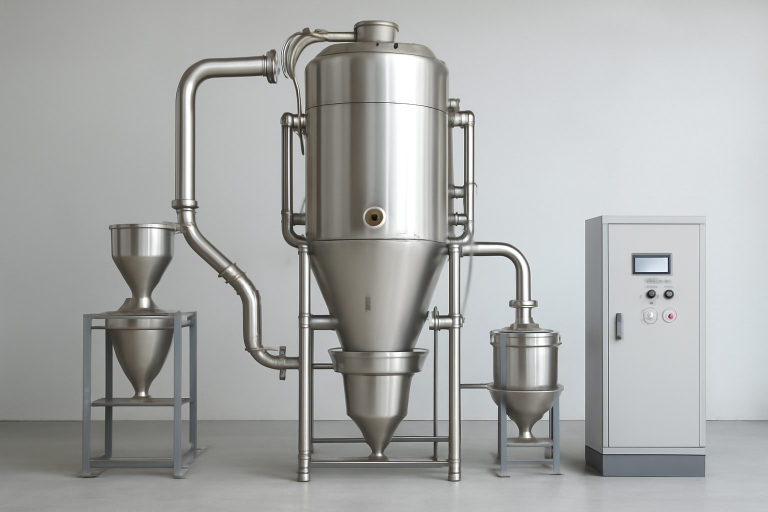

Auger Filling Machines: The “Traps” No Manual Will Tell You About
Saw a Reddit post last month. The title was gold: “I bought a powder filling machine, and it doesn’t suck.” Clicked in. Turns out it was a typo. Should’ve been “does suck.” Comments exploded. Everyone started sharing their horror stories.
This got me thinking. Auger Filling Machines look simple. Just a spinning screw dumping powder into bags. How hard can it be? Turns out, way harder than you’d think.
“Spin Faster, Fill Slower”—The Physics That Breaks Your Brain
An industry veteran posted a long write-up on an auger filling forum. He shared this case: A client thought every 0.1 seconds wasted was money burned. So they cranked the speed from 600 RPM to 900 RPM.
It got slower.
Here’s why. Powder isn’t water. It won’t just flow down obediently. Spin too fast? Particles can’t settle into the screw flights. They slip. Each revolution delivers less powder. You end up needing more turns to hit target weight.
Reminded me of friction angles from physics class. Sometimes slow is fast. An engineer on Quora mentioned the same issue. He was designing a flour dispensing system. Found that screw geometry matters more than speed. Everyone assumes smaller diameter and shallow pitch means better accuracy. But most machines use a 1:1 pitch ratio.
Why? Because material flow doesn’t care about your math formulas.
Cheap Machines? Vevor’s “Schrodinger’s Accuracy”
A startup founder shared his nightmare on the Packaging subreddit. He needed to fill pet supplement powder. Budget was tight. Grabbed a Vevor machine off Amazon.
His words: “Sometimes it’s off by a few grams. Acceptable. Sometimes it dumps the whole bag. Or nothing at all. Fast speeds make it worse.”
Comments were interesting. Some defended Vevor. “Bought their distilling gear, hydraulic crimpers, mini fridges. All fine. They just can’t do powder filling.”
This reveals an industry secret: Powder filling is insanely difficult.
Liquids flow. Solids have shape. Powder? It’s in between. And moody. High humidity? Clumps. Too dry? Static makes it stick to the screw. Every Pharmaceutical Equipment Manufacturer knows this. Drug powder accuracy needs to hit ±0.1%. Random machines can’t touch that.
People recommended All Fill and Trydyne. “Expensive, sure. But at least no midnight complaint calls from customers.”
Cleaning: The Time Bombs Hiding in Screw Threads
Someone on the manufacturing subreddit was upgrading equipment for his girlfriend’s fermented buckwheat business. He mentioned a detail that stuck with me. The buckwheat is boiled then drained. Moist and sticky. Like cooked rice.
Someone immediately warned: “Don’t use auger filling! It’ll clog. Cleaning is a nightmare.”
Spot on. I dug through research. The biggest hidden cost of a Powder Filling Machine isn’t the machine. It’s daily cleaning time.
A food plant worker complained on Reddit. Their auger conveyor has pneumatic hammers. They bang it every hour to prevent clogs. “The machine’s thick steel. But bored operators tap it anyway. Stress relief.”
Pharma is stricter. Screws, hoppers, seals—everything touching product gets disassembled. Cleaned with special solvents. Milk powder followed by coffee powder? Skip thorough cleaning? Enjoy your product recall.
One detail people miss: the gap between screw and filling chamber. Too big? Powder leaks. Accuracy tanks. Too small? Jamming and wear. Engineers say this tolerance needs to stay under 0.1mm.
Material “Personality” Determines Machine Fate
A Quora question asked: “How do powder filling machines work?
Top answer didn’t explain mechanics. Instead: “Depends on what you’re filling. Wheat kernels? Auger is best. Coal? Maybe a conveyor belt. Thick paste-like stuff? Well…”
Sounds obvious. But it’s industry truth.
That buckwheat case proves it. Someone suggested looking at mushroom cultivation equipment. Mushroom spawn substrate is also moist grain. They found a company called Mushroom Media. Specializes in “wet granule” filling.
The other extreme is ultrafine powder. Someone wanted custom vitamin formulas. 100mg caffeine, 2g protein, 5g fiber per pack. Each ingredient has different density and flow. One auger filler can’t handle this. You need multi-hopper batching systems.
Flour, milk powder, coffee, pharmaceuticals—every powder has its own temper.
An engineer shared test results. Same machine, different powders. Accuracy swung from ±1g to ±10g. The culprit? “Head pressure.” More powder in the hopper means more weight on the screw. Each rotation delivers more product.
Solution? Keep hopper level constant. Or switch to weight feedback systems. Fill and weigh simultaneously.
Running the Numbers: Is a Machine Worth It?
The most practical discussion happened on AskEngineers.
Under that buckwheat post, one reply nailed it: “Forget whether the machine works well. Do the math first.”
He gave a simplified model:
- Labor cost: $20/hour
- Manual filling speed: 2-5 bags/minute
- Machine speed: 10-15 bags/minute
- Machine investment: $2,000-$3,000
If the machine saves 3 hours of labor daily, a $2,000 investment pays off in 34 days.
But that’s ideal.
Someone quickly added: “Don’t forget maintenance, training, downtime risk. Also, what do workers do with those 3 free hours? Scrolling their phones? You’re not saving money.”
Another mentioned hidden costs: “Buy spare parts. If it jams, you can’t stop the whole line. If budget allows, buy two machines.”
This explains a trend. Many small business owners outsource to packaging companies. Per-unit cost is higher. But no depreciation, repairs, or training headaches.
A custom vitamin entrepreneur said: “I contacted several contract manufacturers. None wanted small batch custom formulas. Their equipment is designed for high-volume standardized runs. My every-customer-different-recipe model? Nightmare for them.”
The Ultimate Choice: Auger, Cup, or Weighing?
Professional forums constantly ask this: “Auger or cup filling—which is better?”
Quick breakdown:
- Auger: High accuracy, versatile, expensive, hard to clean
- Cup: Fast, cheap, slightly lower accuracy, easy to clean
- Weighing: Highest accuracy, slow, very expensive
All-Fill’s tech blog says cup fillers cycle faster. Usually hit 1-2% accuracy. Augers can reach 0.5% or better.
A Quora answer hit the bullseye: “Best machine? Depends on your product, accuracy needs, budget, and patience.”
One video impressed me. A Japanese rice dispensing machine. Uses auger to keep rice fluffy without compression. Heats and holds temperature too. Someone commented: “70°C heating doesn’t work for me. I make fermented foods. Heat kills the cultures.”
Manufacturer replied: “We can customize. Remove the heating function.”
That’s the key—no perfect standard machine exists. Only the best solution for you.
Final Thoughts
From these real Reddit and Quora discussions, I spotted a pattern.
People who successfully adopted automation didn’t jump to the fanciest machine. They:
- Understood their material’s characteristics first
- Did proper ROI math (not just payback period)
- Started with small-scale tests
- Budgeted for “surprises” (they always happen)
Like that engineer said: “Think buying a machine solves everything? No. It’s the start of new problems. But prepare properly, and those ‘new problems’ become manageable.”
After all, no machine is perfect. But it beats hand-filling 600 bags of buckwheat, right?