
A Complete Guide to Multi-Station Rotary Tablet Presses for Pharmaceutical & Supplement Production
There’s a subtle shift happening in tablet production these years. Single punch tablet presses are increasingly becoming “lab standard equipment,” while multi-station rotary tablet presses are turning into the threshold equipment for scaled production.
Simple breakdown:
- Single station: Presses one tablet at a time, simple structure, suitable for small batches and R&D sampling.
- Multi-station (rotary): A turret packed with punch dies, multiple stations working simultaneously. Each revolution produces a batch of tablets—hourly output directly reaches tens of thousands, even hundreds of thousands.
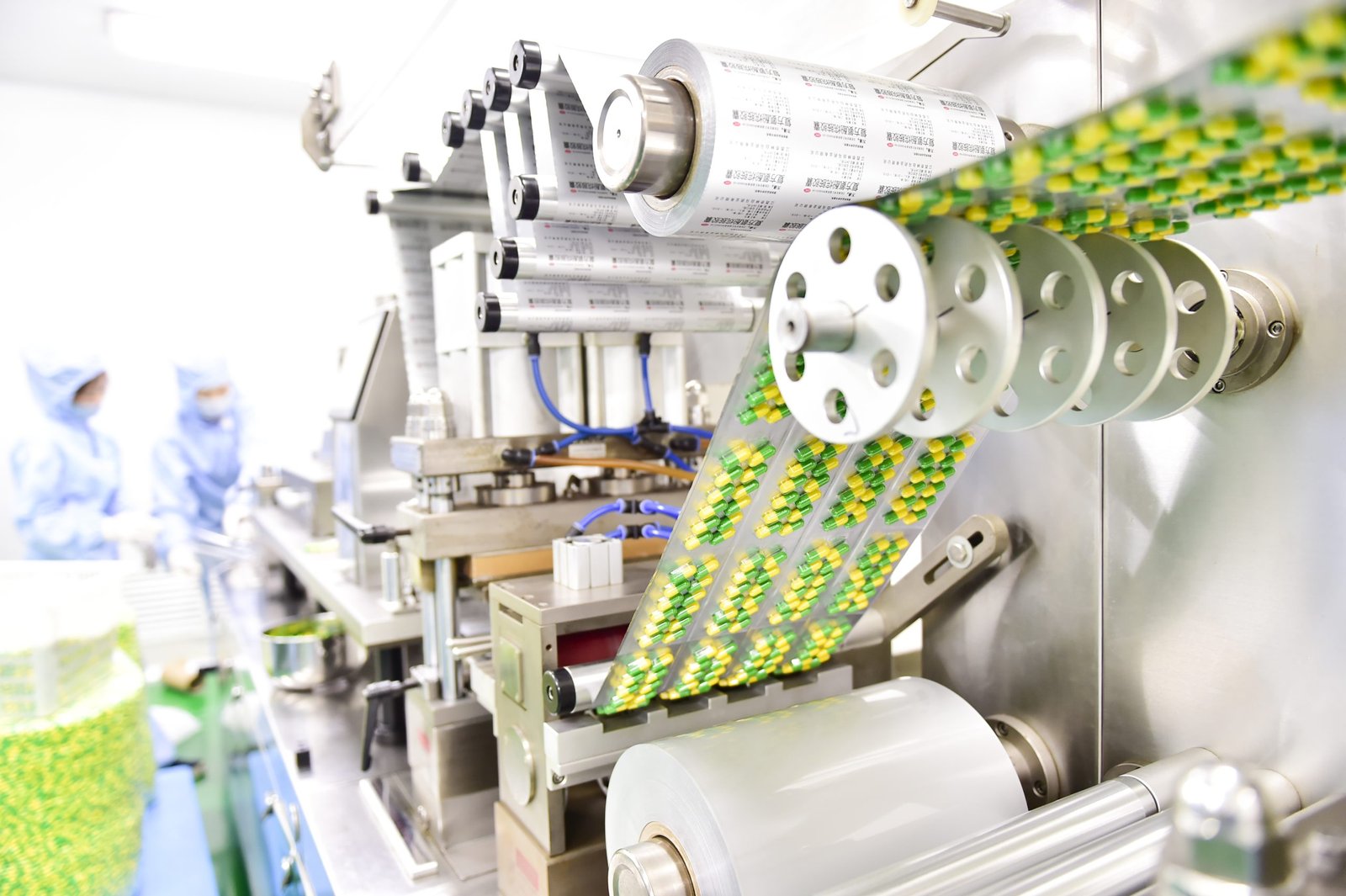
Multi-station rotary tablet press essence: Installing numerous upper punches, lower punches, and die cavities on a rotating turret. Powder enters die cavities through hoppers and feeders. As the turret rotates, it sequentially passes through filling, pre-compression, main compression, ejection stations, achieving continuous, high-speed tablet production.
This is why: Visit any decent pharmaceutical factory or major supplement manufacturer—core production lines basically can’t bypass “Rotary / Multi-Station Tablet Press” keywords.
But the contradiction lies precisely here:
For most manufacturers: Should we get multi-station rotary presses? When? What specifications?
This decision determines money, risk, compliance, and survival for the next three years.
This article tears this question wide open.
Analysis & Prediction: The “Bottom Logic” of Multi-Station Tablet Press
First Understand: What Makes Multi-Station Tablet Press So Powerful?
Multi-station tablet presses (also called rotary tablet press / multi-station rotary press) have several characteristics:
- Multiple punch sets + rotating turret
Multiple upper/lower punches and die cavities arranged along turret edge. As turret rotates, multiple stations simultaneously complete filling and compression. Compared to single punch “one tablet per cycle,” this achieves “dozens per revolution,” even hundreds. Hourly output easily exceeds ten thousand tablets. - Continuous operation, high-speed, high-output
Machine runs continuously, material feeds continuously, turret rotates continuously. True continuous production equipment, naturally designed for “high output + stable quality.” - Better control of tablet weight, hardness, thickness
Through high-precision dies combined with high-pressure systems, better reduces tablet weight variation, controls tablet thickness and hardness, making pharmaceutical or supplement tablets more consistent in appearance and quality. - Multi-spec, multi-shape switchable
Replace punch dies to produce different diameters, shapes (round, shaped, scored tablets, etc.), adapting to multi-SKU reality.
One sentence: Multi-station rotary tablet presses solve—scaled production + quality consistency + reduced labor costs.
Compared to Single Punch—Difference Isn’t Trivial
Direct outcome comparison:
| Dimension | Single Punch Press | Multi-Station Rotary Press |
|---|---|---|
| Capacity | Low, one at a time | High, dozens to hundreds per revolution, tens of thousands hourly |
| Application | R&D, pilot, small batch | Medium-large batches, long-term stable production |
| Weight consistency | Easily affected by operation and feeding | Through high pressure + precision dies, weight variation more controllable |
| Changeover & cleaning | Frequent changeovers, long downtime | More complex structure, but supports relatively quick spec switching |
| Investment cost | Cheap equipment, simple maintenance | Equipment + installation + validation costs high, long debugging time |
| Energy & noise | Low energy, relatively controllable noise | Quality equipment achieves low noise, low vibration, higher efficiency |
| GMP compliance & audit pressure | More suitable for simple scenarios or pilot production | Better fits modern pharma’s scaled and consistency requirements |
I initially thought: “As long as it presses tablets, isn’t multi-station overhyped?”
But once you’ve actually seen a factory where one line must make millions of tablets daily, then look at that single punch slowly going “tap-tap-tap”… You’ll understand: Equipment capability itself is business model capability.
Industry Trend: Multi-Station Press Becoming “Standard,” Not “Optional”
Combining several obvious trends in pharma, supplements, and food supplements these years:
- Regulations tightening, batch traceability and quality consistency becoming baseline
Relying purely on “manual experience + small equipment” to support large-batch production carries increasing risk. High-pressure, high-precision, multi-station rotary presses more easily satisfy GMP and customer audits. - Order fragmentation, but overall demand expanding
Product SKUs increasing: different specs, flavors, dosages, market versions. Multi-station rotary presses, combined with quick changeover and standardized cleaning procedures, can balance high output with variety. - Labor costs continuously rising
Multi-station machines increase single-machine output, diluting labor and management costs. This will be more obvious in Southeast Asia, Latin America, emerging markets. - Cross-industry players entering (functional foods, sports nutrition, pet nutrition, etc.)
They’re sensitive to capacity + appearance + mouthfeel. Multi-station presses more easily produce tablets with stable appearance and controllable dissolution curves.
My judgment:
- For mid-large pharma factories, major supplement manufacturers:
Multi-station rotary presses are mandatory, and will gradually evolve from “single core machine” to multiple units on separate lines, multiple models matching to achieve tiered production for different products. - For growing small-mid manufacturers:
Whether to introduce multi-station machines becomes a life-or-death node—
Getting one means stepping toward scale and branding.
Not getting one basically locks you into low-price contract manufacturing, small scattered orders track.
So What? “Hidden Signals” for Different Roles
For Factory Owners: You’re Not Choosing a Machine—You’re Choosing a “Development Path”
If you’re a factory owner, Multi-Station Tablet Press gives you direct signals:
- Does your business model bet on “scaled + stable supply”?
Multi-station machines serve large batches. If your customer structure determines only small, unstable orders, throwing money at premium multi-station equipment may result in cash flow not keeping up with depreciation. - Can you handle higher-standard customers (multinational pharma, major brand orders)?
These customers want more than tablets:- Stable capacity
- Process control
- Batch traceability
Multi-station tablet press is one of your “entry tickets” to this game.
- Are you willing to shift from “people-run factory” to “equipment + process-driven factory”?
Single punch era, many things relied on master craftsmen’s feel and experience.
Multi-station era focuses more on:- Pressure curves
- Tablet weight online detection
- Speed, fill depth, die wear management
What determines your production line stability is the system, not individual experience.
So, what Multi-Station Tablet Press truly exposes is: Are you a “survive-the-day small factory” or a “factory with pricing power/brand factory”?
For R&D and Process Engineers: If Formulas Aren’t Designed for Multi-Station, You’re Asking for Trouble
Multi-station machines have much stricter requirements for powder/granules than single punch:
- Powder flowability must be good, otherwise uneven feeding causes weight fluctuation
- Compressibility must be moderate—forms but not too hard
- Dust can’t be excessive, otherwise wears dies, contaminates equipment
This means: Your process development must consider from the start “whether it runs stably on multi-station rotary machines.”
Otherwise a very common and awkward scenario emerges:
Lab formulation performs perfectly on small single punch machine,
Once on multi-station rotary machine—
Either chipping and capping, or sticking, weight fluctuation.
This isn’t the machine’s problem—R&D never included “final production equipment” in design boundaries from the start.
For Brands and B-End Customers: Capacity Is the Selling Point
Consumers won’t care whether you use multi-station machines for production. But B-end clients and multinational customers care about:
- Can your capacity support their national/global launch?
- Once sales take off, can you increase production without changing formulation?
- Do you have hardware foundation to pass various on-site audits, third-party certifications?
Frankly, multi-station tablet presses don’t appear directly in advertising copy, but show up in tender documents, customer audit reports, partnership negotiations. It’s a “hard card” behind pricing power + negotiation capability.
Now What? Action Plans for 3 Typical Players
If You’re: A Mid-Size Factory with Modest but Steadily Rising Annual Output
Your pain point usually: Orders growing, but capital, space, people all limited. Suggest this approach:
- Don’t go all-in on highest-speed machine from the start—first lock in a “capacity step”
- Evaluate true shipment volume and growth rate over past 12-24 months, don’t trust sales’ “optimistic forecasts”
- Choose a mid-speed, multi-station model that noticeably boosts capacity, but not so high you must “desperately hunt orders” to fill it
- Leave yourself some buffer, but don’t strangle cash flow
- Synchronously upgrade supporting process and quality systems
- Re-examine your existing formulations and processes, first pick those tablet-friendly, high-batch-demand products for new equipment
- Establish basic tablet weight, hardness online/offline detection records, leaving evidence for future customer audits
- Use equipment for branding, not just as a “lump”
- When communicating with customers, dare to mention:
“We’ve installed multi-station rotary tablet presses, can support continuous batch supply.” - This sounds ordinary, but to them it’s a statement: “We’re not a workshop.”
- When communicating with customers, dare to mention:
If You’re: A Traditional Small Factory Already with Multiple Single Punches
You face the classic struggle of “should we upgrade?” My advice will be slightly radical:
If in the past 1-2 years, you’ve missed orders due to capacity bottlenecks 3+ times,
And financially still have some accumulation—
Then you should consider replacing part of single punch capacity with multi-station machines.
Implementation thinking:
- “Downgrade” single punch machines to R&D, sampling, and small-batch exclusive use
Don’t think about scrapping—use them for process validation, small orders, customer samples. Extremely cost-effective. - Use one demonstration line as “standard answer”
Select one production line, make it:- Raw material prep → granulation → multi-station pressing → coating/packaging
Fully traceable “showcase line.” When customers visit for inspections later, you have a good-looking model.
- Raw material prep → granulation → multi-station pressing → coating/packaging
- Consciously “filter customers”
After multi-station tablet press arrives, have courage to:- Proactively reduce extremely small, extremely low-price, unstable customers
- Tilt resources toward potentially long-term cooperative major customers
Otherwise, your best equipment gets “drained by low-value orders.”
If You’re: An Already-Scaled Large Factory or Group
For you, the question isn’t “should we get multi-station,” but how to plan multi-model, multi-line layout.
Several key strategies:
- Configure equipment by product and sales tiers
- Core major products: High-speed multi-station machines (more stations + double-sided tablets + comprehensive monitoring)
- Growth products: Mid-speed multi-station, balancing capacity and flexibility
- Innovative/exploratory products: Small multi-station or upgraded single punch machines
- Upgrade “tableting” from single process to “data-driven process center”
- Systematically record: fill depth, pressure curves, speed, tool wear, batch quality data
- Explore scale-up patterns, laying groundwork for future continuous production introduction, intelligent parameter adjustment
- Use equipment advantages to drive external collaboration and CMO business
- When promoting externally, clearly state your tablet pressing capacity structure, equipment models, minimum/maximum batch sizes supported
- Through equipment and capacity transparency, reduce customer doubts, transforming yourself from “a supplier” to “preferred supplier”
Key Reminder: Don’t Be Fooled by “Parameter Sheets”
Must still remind: Multi-station rotary tablet presses are cool, but pitfalls exist.
Several real-world lessons:
- Only looking at “maximum output” is typical misjudgment
Parameter sheets say hundreds of thousands of tablets per hour—that’s ideal state, specific spec, specific formula theoretical value.
What truly matters:- Economic speed range under your actual product specs
- Tablet weight consistency, breakage rate, rework rate within this range
- Die quality and maintenance
Many factories initially spend big money buying good machines, but:- Purchase cheap dies
- Die maintenance, cleaning, rust prevention inadequate
Over time, various sticking, chipping, black spot problems appear frequently, eventually all blamed on “equipment sucks.”
- Operation and process team learning curve
Multi-station machine operation, adjustment, troubleshooting are obviously more complex than single punch.
Need advance training planning, ideally involving R&D, process, production in equipment selection and commissioning, not “buy equipment, throw to production to figure out themselves.”
In other words, multi-station tablet press isn’t a “buy it and automatically make money” magic device. It’s more like: A foundational capability requiring you to seriously design “usage methods.”
Summary
Multi-Station Tablet Press isn’t just a machine—it’s your watershed from “workshop logic” to “industrial logic.”
- For factory owners, it asks:
Do you really want to scale up? Are you willing to endure that “scaling up” painful period? - For process and R&D, it reminds:
Future formulations you design aren’t for lab play, but must run long-term, stably, high-speed on multi-station rotary machines. - For brands and channels, though it won’t appear on posters, it quietly influences:
Your delivery capability, stability, negotiation confidence, even whether you can land better customers.
The decision isn’t about buying a machine. It’s about choosing what you’ll become.