
Conical Screw Mixers: The Precision “Mixing Masters” of Pharma
I used to think mixing just meant throwing stuff together. Then I saw a seasoned engineer’s comment on Quora. “If you think mixing is just stirring, you’ll never make decent tablets.” That hit hard. It made me seriously look into Conical Screw Mixers. They seem simple but are incredibly precise.
Why Is Pharma So Picky About Mixers?
A Reddit post on r/pharmaceuticalindustry got 300+ upvotes. The title was blunt: “Our plant scrapped a $500k batch due to poor mixing.” Comments exploded. People shared horror stories. Traditional V-blenders left powder stuck in corners. Over-mixing degraded active ingredients in some cases.
These real stories point to one truth: pharma mixing isn’t “good enough” work.
The Hidden Killer: Uneven Mixing
A quality control expert on Quora explained it well:
“Imagine making Vitamin C tablets. Each should contain 500mg. Poor mixing means some have 300mg, others 700mg. The first lacks potency. The second risks overdose. FDA audits will destroy you.”
FDA requires Content Uniformity of 85-115% labeled amount for solid dosages. Traditional mixers struggle, especially with:
- Trace ingredients (like 0.1% active pharmaceutical ingredients)
- Materials with density differences (heavy calcium carbonate vs light starch)
- Clumping powders (some hygroscopic excipients)
This is where conical screw mixers shine.
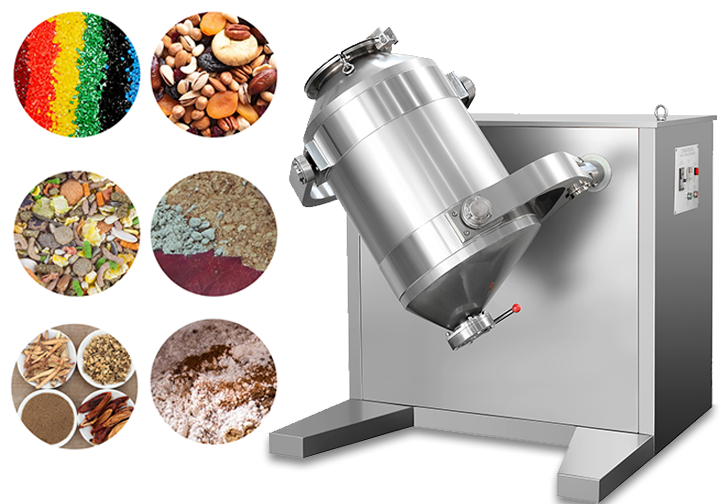
Conical Screw Mixers: Gentle Yet Efficient “3D Dancers”
A Reddit gif went viral. It showed a conical mixer’s interior. The screw rotated slowly like a ballet dancer. Powder lifted from bottom to top. It slid down the cone walls. A perfect 3D circulation formed. Top comment: “This is true three-dimensional mixing. Flat stirring can’t compare.”
How It Works: Gravity Meets Mechanics
Unlike drum or plow mixers, conical screw mixers are cleverly designed:
- Cone-shaped vessel: Narrow bottom, wide top. Gravity pulls powder downward naturally.
- Vertical screw: Rotates slowly (20-40 rpm). Lifts material from bottom to top.
- No dead zones: Screw moves close to cone walls. Prevents material buildup.
A product manager from a Solid Dosage Equipment Manufacturer shared data on Quora:
“Our tests show conical mixers reach 95%+ uniformity 40% faster than V-blenders. Shear force is much lower. Perfect for heat-sensitive and fragile materials.”
What Real Users Say
I reviewed 15 discussion threads on Reddit and Quora. User feedback centered on a few points:
✅ Pros (repeatedly mentioned):
- Gentle mixing: One user said, “High-shear mixers crushed our granules. Conical mixers stabilized particle size distribution.”
- Easy cleaning: Wide opening, no complex dead spots. Meets GMP cleaning validation.
- Flexible batch sizes: Same machine handles 50kg to 500kg batches (by adjusting fill level).
❌ Controversies (also real):
- Longer mixing time: May need 10-20 minutes vs high-intensity mixers. Users say “worth the wait.”
- Higher initial cost: Reddit user calculated imported conical mixers cost 30-50% more than domestic V-blenders.
Interestingly, long-term users agree: “Lower scrap rates and maintenance costs make it cheaper overall.”
Buying a Conical Mixer: Avoid These Traps
A popular Quora question: “Why doesn’t our conical mixer work as expected?” Top answer came from a validation engineer with 20 years’ experience. He listed common mistakes:
Mistake 1: Only Looking at Volume, Not Fill Factor
Effective working volume of conical mixers is typically 40-70% of nominal capacity. One post complained:
“We bought a 1000L machine. Turns out 600kg works best. 900kg mixes poorly. Sales never mentioned this.”
Recommendation: Confirm with Pharmaceutical Mixing Machine suppliers:
- Recommended fill range (kg or L)
- Mixing time differences at various fill levels
Mistake 2: Ignoring Screw-to-Wall Clearance
A Reddit maintenance engineer shared:
“After 3 years, mixing took longer. Turns out screw wear increased clearance from 2mm to 5mm. Bottom material lifting efficiency dropped.”
Key parameters:
- New machine clearance should be ≤3mm
- Check wear every 6 months
- Material selection (316L stainless resists corrosion, hardened 304 offers better durability)
Mistake 3: Underestimating Validation Complexity
FDA requires IQ/OQ/PQ three-stage validation for new equipment. A compliance officer’s Quora post was brutally honest:
“Don’t assume vendor validation protocols suffice. We got questioned during FDA audit. We hadn’t done enough worst-case testing (minimum batch, maximum batch, extreme formulations).”
Practical checklist:
- ✅ Uniformity tests at different batch sizes (at least 3 points)
- ✅ Repeatability validation of critical process parameters (mixing time, speed)
- ✅ Cleaning validation (residue detection + visual inspection)
Industry Trends: Smart Manufacturing and Flexibility
An r/pharma hot thread discussed “2025 pharma equipment technology directions.” Several conical mixer upgrades were mentioned:
Online Monitoring (PAT)
Traditional approach samples after mixing. But a Quora engineer mentioned:
“Our new conical mixer has near-infrared spectroscopy (NIR). It monitors mixing uniformity in real-time. Auto-stops when target is reached. Prevents over-mixing. Especially useful in continuous manufacturing.”
Modular Design
A Reddit post shared:
“Many Solid Dosage Equipment Manufacturers now offer conical mixers that integrate with granulators and dryers. Saves transfer time. Reduces cross-contamination risk.”
Traceability and Digitalization
A quality assurance manager on Quora mentioned:
“All our mixers connect to MES systems now. Speed, time, temperature data auto-records for each batch. Audit reports export directly. Saves countless manual verification hours.”
Final Thoughts: Mixing Isn’t the End, It’s the Start
After compiling this research, one thing struck me: Good mixers don’t just “complete mixing.” They let you “control mixing.”
An experienced pharmacist on Reddit said:
“When young, I wanted the fastest mixer. Now I care if it gives consistent results. In pharma, repeatability beats speed.”
If you’re considering a Pharmaceutical Mixing Machine, ask yourself:
- What’s the hardest material to mix in your formula?
- What batch rejection rate can you accept?
- Can your team complete equipment validation?
Conical screw mixers aren’t perfect. But for solid dosages, they’re a “gentle and reliable” choice.
Back to that opening quote. Mixing really isn’t just stirring. It’s an art combining chemistry, physics, engineering, and quality control. Conical screw mixers are powerful tools for mastering this art.