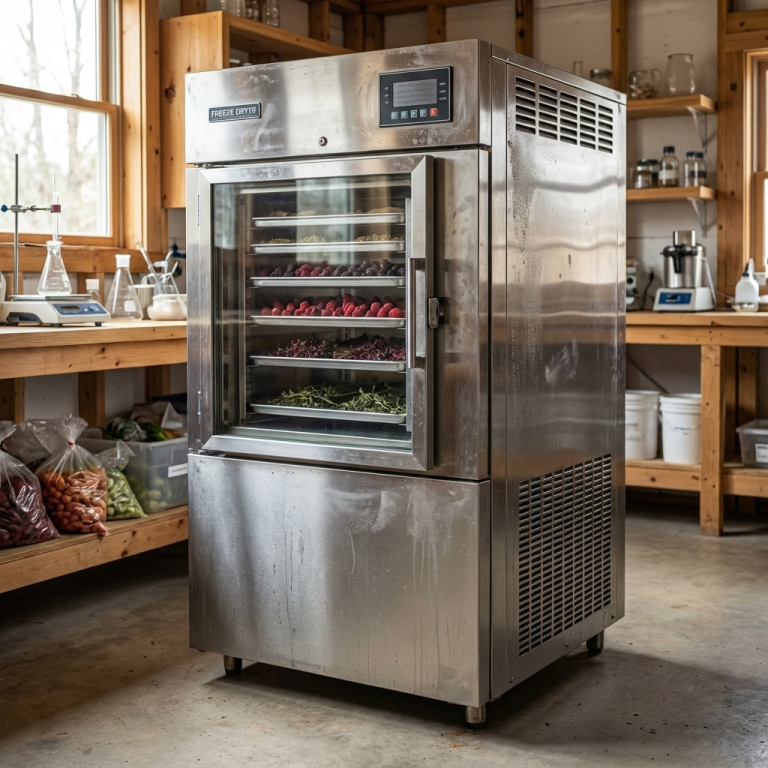

Hot Air Drying Ovens: The Unsung Hero of Pharma Manufacturing
The Truth Nobody Talks About: 80% of Drug Quality Issues Start Here
I worked at a pharma plant once. Never thought a simple box could matter so much. That Hot Air Drying Oven sat quietly in the corner. But engineers told me: if it fails, everything stops.
A pharma engineer on Quora nailed it:
“People think tablet making is all about the press machine. Wrong. If your drying step fails, you’re left with sticky, unstable products that fail every quality test.”
On Reddit’s r/pharmaceuticaltech, someone vented:
“Spent 3 weeks troubleshooting batch failures. Turns out the oven’s airflow was uneven. THREE WEEKS.”
That hit home. Choosing the right drying equipment isn’t optional. It’s survival.
What Makes Hot Air Circulation Ovens Special?
1. Airflow Matters More Than Temperature
Traditional ovens have one big problem: uneven heating.
Think of baking cookies at home. Edges burn while centers stay raw. Pharma can’t work that way. Every tablet needs identical moisture content. A 0.5% difference can mean rejection.
Hot Air Circulation Ovens solve this through:
- Forced convection systems: fans push hot air everywhere
- Multiple temperature sensors: every tray gets monitored
- Adjustable airspeed: low for sensitive materials, high for quick drying
A Quora comparison showed interesting numbers:
- Regular ovens: moisture variation of 2-5% per batch
- Circulation ovens: variation drops to 0.3-0.8%
That’s not trivial. It can push your pass rate from 85% to 98%.
2. It’s Not Just Blowing Hot Air—It’s Smart Engineering
A Reddit thread asked a great question:
“Why does my competitor’s drying time is 30% shorter with the same temperature?”
The answer lies in airflow design:
- Horizontal vs vertical flow: wet granules need vertical (removes moisture fast), thin layers need horizontal (even heating)
- Return air ratio: recycling some air saves 30% energy
- Duct optimization: good design eliminates dead zones and moisture pockets
One Solid Dosage Equipment Manufacturer’s white paper mentioned CFD simulation. They reduced airflow unevenness from 15% to under 5%. Real engineering, not magic.
Hidden Traps When Buying: Price and Size Aren’t Everything
Trap 1: Ignoring Material Grade
A Reddit user shared a painful lesson:
“Bought a cheaper oven with 304 stainless steel. After 6 months, rust spots everywhere because we dry acidic intermediates.”
The right approach:
- Material contact parts need 316L stainless steel minimum
- Corrosive materials? Use Hastelloy
- Mirror-polished interior (Ra≤0.4μm) prevents residue buildup
Trap 2: Temperature Uniformity Claims Are Tricky
Some manufacturers claim “±2°C” but don’t specify: empty or loaded? Steady state or during heating?
A quality engineer on Quora warned:
“Always ask for the temperature uniformity survey report under full load conditions.”
Big difference. Achieving ±1°C when empty is easy. Maintaining it when loaded is the real test.
Trap 3: Overlooking Validation Friendliness (GMP Killer)
This gets missed constantly. Pharma demands verifiability, not just functionality.
A proper Hot Air Drying Oven should have:
- IQ/OQ/PQ documentation: supplier-provided, not DIY
- 21 CFR Part 11 compliance: data integrity, traceability, tamper-proof
- Multiple validation ports: not one probe, but 10+ simultaneous measurement points
A Reddit post was brutally honest:
“Our auditor asked for historical temperature data from 3 months ago. We couldn’t provide it. Failed the inspection.”
Scary stuff.
How to Pick a Solid Dosage Equipment Manufacturer
The market has tons of Hot Air Circulation Oven makers. But truly reliable Solid Dosage Equipment Manufacturers share key traits:
Trait 1: They Sell Process Understanding, Not Just Boxes
Good suppliers ask:
- What material are you drying? Will the crystal form change?
- Does your drying curve have plateaus (constant temperature holds)?
- What’s your downstream process’s moisture tolerance?
Not just: What capacity? When do you need it?
A procurement manager on Quora shared:
“The best manufacturer we worked with sent their process engineer to our site before quoting. They optimized our drying recipe and reduced cycle time by 40%.”
Trait 2: Service Means Proactive Health Checks
Equipment degrades over time. Fans lose efficiency. Seals age. Heating elements accumulate deposits.
Reliable suppliers offer:
- Annual PM (preventive maintenance) schedules
- Remote monitoring systems (networked equipment, automatic alerts)
- Fast spare parts response (local warehouse, next-day delivery)
Trait 3: They Have Industry-Specific Success Stories
Pharma and food drying are completely different. When choosing suppliers:
- ❌ “We did something similar for a food plant”
- ✅ “We supplied 20 units for XX Pharma’s cephalosporin line”
A Reddit user learned the hard way:
“Hired a food equipment maker for pharma drying. They didn’t understand cGMP requirements. Cost us 6 months in revalidation.”
Future Trends: Smart Tech Is Essential, Not Hype
Modern Hot Air Drying Ovens go beyond “set temperature-wait-retrieve.”
1. Real-Time PAT (Process Analytical Technology)
- NIR (near-infrared) probes monitor moisture content live
- No more “dry for X hours” guesswork
- Stop when moisture hits target
- Reddit users report this eliminated over-drying issues
2. Digital Twins
- Equipment data streams to cloud in real-time
- AI predicts optimal drying curves per batch
- One Solid Dosage Equipment Manufacturer case: 22% energy savings, 15% cycle reduction
3. Modular Design
- Not “buy one fixed-size box”
- But “add drying modules as capacity grows”
- A Quora CMO said this saved them from replacing entire systems
Final Thought: Don’t Let Drying Be Your Bottleneck
Back to the opening question: why do 80% of quality issues trace to drying?
Not because it’s hard. Because it’s underestimated. Everyone watches reactors and tablet presses. But when the Hot Air Circulation Oven fails, all prior work is wasted.
I initially thought ovens were just “heated boxes.” I learned:
- Airflow design is sophisticated
- Temperature uniformity is non-negotiable
- Validation-friendliness is critical
- Supplier process expertise sets your ceiling
Next time you buy a Hot Air Drying Oven, don’t just check the price sheet. Ask:
- Where’s your full-load temperature uniformity data?
- How many similar projects have you completed?
- What’s your service response time commitment?
- Can we do on-site testing?
Choosing the right Solid Dosage Equipment Manufacturer and equipment saves more than time and money. It saves you from countless late-night meetings asking “why did this batch fail again?”