
How Multi-Effect Spray Dryers Cut Energy Costs by 40% and Solve Powder Flowability
The “Silent Killer” Behind Your Powder
Spray dryers look simple. Don’t be fooled. They hide one of industry’s core contradictions.
On one hand, they’re magic. Liquid transforms into powder instantly. This tech powers global supply chains for milk powder, pharmaceuticals, and chemicals.
On the other hand? They’re energy-guzzling, high-maintenance nightmares.
Welcome to late 2025. Energy prices swing wildly. Environmental regulations tighten by the month. Annual electricity and heat costs from these machines choke small and mid-sized companies.
I used to think spray drying was an irreplaceable “efficiency miracle.” Deeper research changed my mind. It’s actually a double-edged sword. The technology has peaked. Disruption is knocking on the door.
Here’s the real conflict. Traditional single-effect spray dryers chase speed blindly. They sacrifice cost efficiency and sustainability. Newer multi-effect designs promise to fix everything. But can they actually scale?
This isn’t just theory. The global powder food market has crossed the hundred-billion-dollar mark. Pharmaceutical powders remain non-negotiable. Yet spray drying eats up over 70% of total drying energy costs.
Carbon neutrality deadlines loom. Business owners face a brutal choice. Stick with aging equipment? Or bet on new tech?
That’s the puzzle we’re cracking today.
From Single-Effect to Multi-Effect: The Evolution Story
The core logic is dead simple. Liquid feed sprays through nozzles into tiny droplets. Hot air hits them. Water evaporates instantly. Dry powder emerges in 2-3 seconds.
Classic single-effect dryers use top-down hot air. They run co-current or counter-current processes. Cyclone separators collect the final product.
Parameter control makes or breaks the outcome:
- Inlet temperature: Too high boosts output but destroys heat-sensitive compounds.
- Feed pump speed: Too fast means particles stick to walls before drying. Reject rates skyrocket.
- Exhaust rate: Too slow leaves moisture levels too high. Storage becomes a headache.
Buchi’s lab equipment proves the pattern clearly. Higher solid content means larger, more porous particles. Higher flow rates drop outlet temps but worsen wall-sticking problems.
So where does traditional tech hit the wall?
First, dust problems and poor flowability. Single-effect machines produce ultra-fine powder. Dust flies everywhere. Flow characteristics suffer. Packaging and shipping become nightmares.
Second, terrible energy efficiency. Evaporating 95% of water in seconds demands massive hot airflow. Industrial units easily burn through thousands of dollars daily.
Industry reports confirm the solution. Multi-effect spray drying technology emerged to address these pain points:
- Stage one: Top atomization for initial drying.
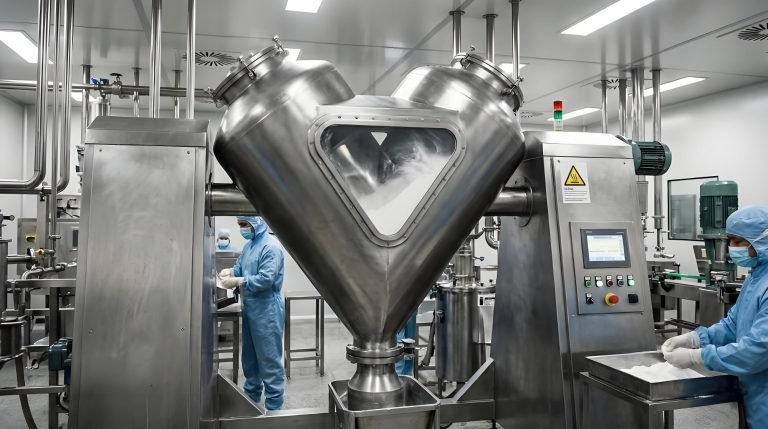
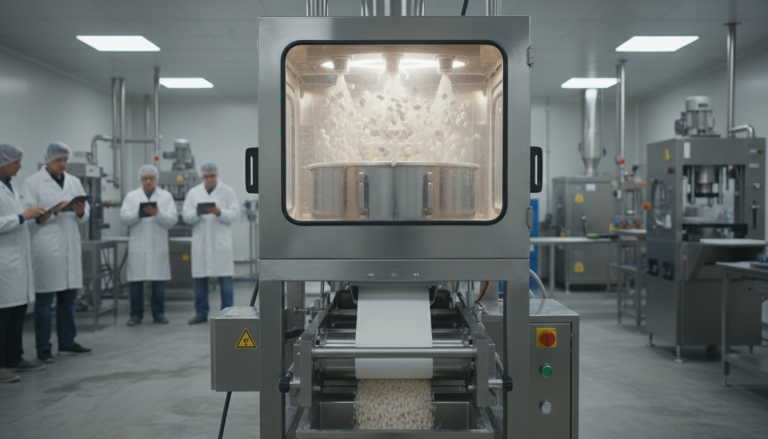
- Stage two: Integrated static fluidized bed at the bottom for wet agglomeration.
Particle diameter jumps from 100 to 300 microns. Powder flows freely. Dust drops by half.
Here’s my bold prediction. Between 2026-2030, multi-effect machines will dominate. Market penetration will surge from 15% to 50%.
Three reasons back this up:
- Energy costs: European carbon taxes have raised hot air costs by 20%. China’s dual-carbon policy favors low-energy equipment.
- AI optimization: Smart systems like pulse drying adjust parameters in real-time. They dodge “wall-sticking dead zones.” Output jumps 30% reliably.
- Product upgrades: Pharma and functional foods are booming. Heat-sensitive materials multiply. Co-current processes win because particles stay shorter and retain more active ingredients.
But don’t celebrate too fast.
New equipment costs a fortune. Small factories can’t afford it. Watching old machines struggle on production lines feels almost ironic.
Industry polarization will be brutal. Big players cut costs 40% through integrated multi-effect fluidized beds. Small factories trapped with single-effect gear barely survive their energy black holes.
Extreme prediction: If electricity prices rise another 15%, traditional machines face mass extinction by 2027.
What Does This Mean? Reshaping Your Supply Chain and Profit Chain
This isn’t just an equipment swap. It’s an industry earthquake.
- Food industry: Milk powder, coffee, and seasoning powders depend heavily on this tech. Traditional powder flows poorly. Packaging line blockage rates run 5% higher. Hidden annual costs reach millions. Multi-effect machines produce uniform, instant-dissolving granules. Inventory turnover speeds up 20%. For small business owners, saved electricity could fund half a year of employee bonuses.
- Pharmaceutical sector: Spray drying excels at microencapsulation. It dramatically improves bioavailability. For heat-sensitive proteins, combining multi-effect and vacuum tech cuts degradation from 10% to 2%. Drug development cycles shorten. FDA approval odds improve.
- Chemical industry: Less dust from pigments and pesticide powders means easier environmental compliance. Avoid massive fines.
Zoom out. Spray drying transformation will drive green upgrades across chemical supply chains. If you’re a buyer or equipment supplier, 2026 opens a critical window.
What Should I Do? 5 Actionable Strategies
- Assess your situation. Find the pain points. Don’t blindly replace equipment. Run a one-week energy audit first. If electricity exceeds 60% of total costs, upgrades become mandatory.
- Upgrade in phases. Control costs. Small businesses don’t need total overhauls. Start with nozzles and cyclone separators. Got budget? Go straight for AI-controlled pulse drying systems.
- Restructure your heat source. Try solar-assisted heating or waste heat recovery systems. Expect roughly 25% energy savings.
- Boost product value. Use multi-effect tech to develop premium “functional powders” or “compound powders.” Remember: Good flowability equals brand premium.
- Leverage policy incentives. Apply for dual-carbon subsidies. Some regions cover up to 30% of equipment costs. Consider equipment leasing to reduce upfront pressure.
Final Thoughts
Spray dryers have served industry for a century. Now they stand at a technology crossroads.
Traditional single-effect machines are like chain-smokers. Powerful bursts, but self-destructive.
Multi-effect technology? That’s the steady newcomer.
At this turning point, those who read the trends and act decisively will survive.