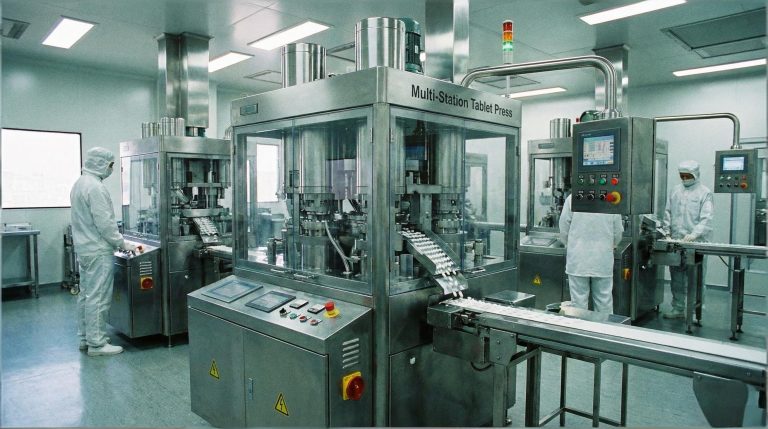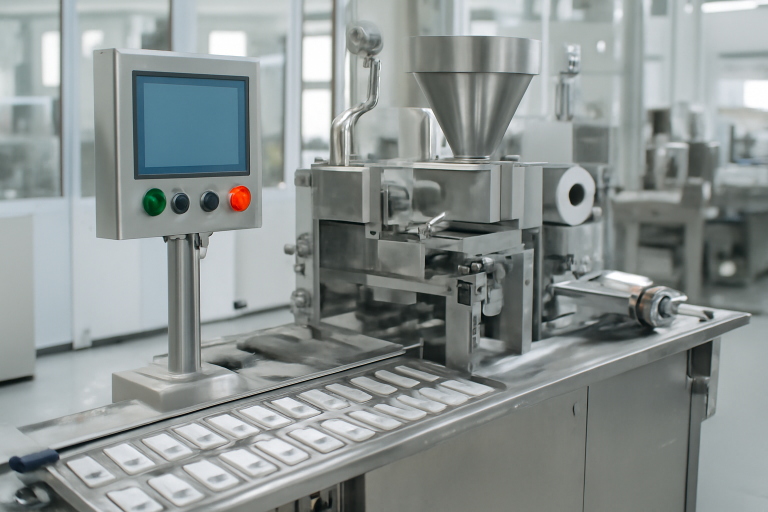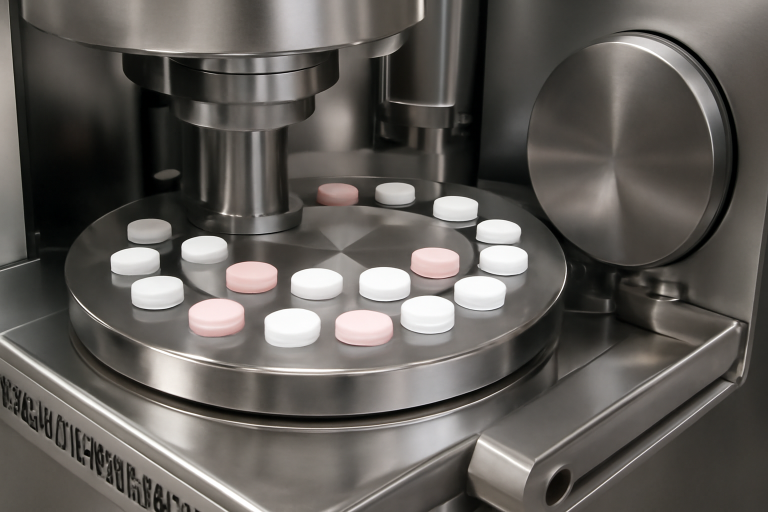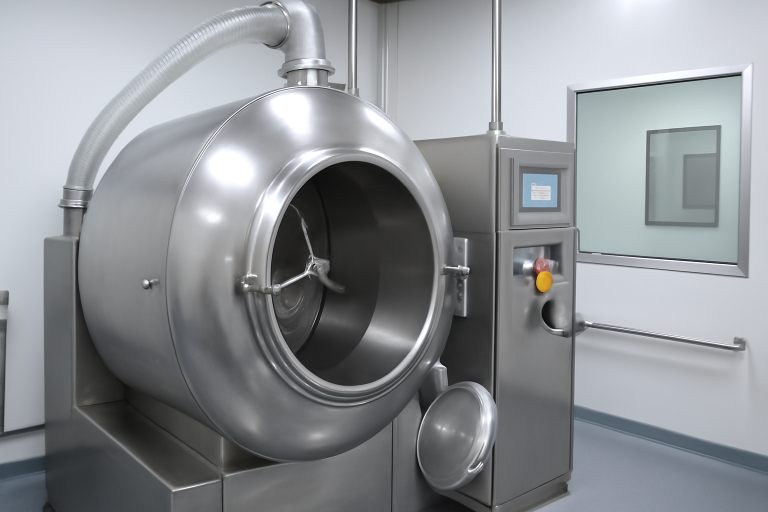

Steam Granulation Systems: The “Steam Magic” in Pharma – Why It Doubles Solid Dosage Production Efficiency
Part 1: What Exactly Is Steam Granulation “Steaming”?
Here’s something counterintuitive. Traditional granulation uses water or ethanol. But steam granulation uses dry steam. Sounds weird, right? How can steam be dry?
A chemical engineer on Quora explained it perfectly:
“Picture your bathroom after a hot shower. The mirror is fogged up. That’s wet steam. But heat water vapor to 150℃ in an industrial boiler. The molecules spread apart. You get dry steam. It touches powder and instantly condenses, releasing latent heat. No excess moisture left behind.”
The physics is simple. Steam condenses and releases energy. This activates binders in the powder like PVP or HPMC. Particles “weld” together in seconds.
A Reddit r/Pharma thread discussed traditional wet granulation pain points:
- Add liquid binder solution first
- Mix and stir until powder clumps
- Spend hours drying in fluid bed dryer
- Screen everything again
The whole process takes 6-8 hours per batch. Steam Granulation Systems? Done in 30-45 minutes.
A technical manager at a Bangladesh Pharmaceutical Equipment Manufacturer said: “We calculated it for clients. Three batches daily saves enough in time costs to buy new equipment within a year.”
Part 2: Why Are Pharma Plants Ditching Traditional Equipment?
Quora has endless discussions about the generational revolution in pharmaceutical granulation machines.
Three sins of old-generation equipment:
- Energy Black Hole
Traditional fluid bed dryers reduce moisture from 30% to 2%. Hot air blows for hours. A former FDA reviewer posted: “The worst factory I saw spent 60% of workshop electricity on drying alone.” - Batch Variations
A quality engineer on Reddit shared a real case. Same formula, different batches showed 20% hardness variation. Why? Uneven liquid binder spraying. Manual control of spray rate and atomization pressure. Every batch was a gamble. - Solvent Residue Risk
Using ethanol as binder means FDA limits are strict. Class 3 solvents must stay under 5000ppm. Traditional drying can’t fully evaporate it. QC teams work overtime testing residues.
Steam Granulation’s game-changing advantages:
- ✅ No external binder solution needed. Uses built-in binders like pregelatinized starch. Steam activates them directly.
- ✅ Near-zero solvent residue. Condensed water vapor gets removed by subsequent drying.
- ✅ High batch repeatability. Steam pressure and temperature are precisely controlled by PLC automation. No relying on “master’s feel.”
A Pfizer engineer on Quora mentioned something interesting: “We tested the same formula for 50 batches. Steam Granulation’s particle size distribution standard deviation was one-third of traditional methods.”
What does this mean? Downstream tableting waste rates get cut in half.
Part 3: But It’s Not a Magic Bullet
After all these benefits, let’s be real. Reddit has plenty of “disaster” stories.
Case 1: Heat-Sensitive API Nightmare
An Indian generic drug factory shared their experience. They used Steam Granulation for an antibiotic. Final product content was only 85% of theoretical value. Turns out the API partially decomposed above 120℃.
Solution? Lower steam temperature but sacrifice granulation quality. Or choose the right pharmaceutical granulation machine. High-end equipment now does “staged steam injection.” High temp initially for fast granulation. Low temp later for stability.
Case 2: Equipment Selection Trap
A procurement manager on Quora complained: “We went cheap with a second-tier Pharmaceutical Equipment Manufacturer. Steam distribution was uneven. Temperature difference between pot ends reached 15℃.”
Result? Particles near the steam inlet were hard and dense. Far end remained loose powder. Ended up selling cheap to animal feed companies.
Lessons learned:
- ✅ Choose brands with steam distribution mapping validation reports
- ✅ Demand trial run data – at least 3 different formulas with particle size, bulk density, and flowability metrics
- ✅ Clarify after-sales response time – valves and seals in steam systems are wear parts
Part 4: Future Trends – Continuous Manufacturing Plus Real-Time Monitoring
Reddit r/PharmaceuticalEngineering recently had a hot thread. Topic was FDA-promoted Continuous Manufacturing.
Traditional granulation is batch-style. One pot at a time. Cleaning, sampling, waiting for QC release in between. But continuous Steam Granulation achieves:
- Powder continuously fed from inlet
- Passes through steam zone, drying zone, cooling zone
- Outlet produces qualified granules directly
A Novartis engineer calculated: “With PAT – Process Analytical Technology – using NIR spectroscopy to monitor particle moisture and size in real-time, theoretically 24-hour non-stop production is possible.”
Sounds like turning pharma plants into assembly lines. Exactly.
But here’s the question: Will regulators buy it?
An FDA consultant on Quora gave an interesting answer:
“FDA doesn’t oppose continuous production. But you must prove your Steam Granulation System in continuous mode produces quality equal to or better than batch mode at every time point. That requires massive validation data.”
Currently under 10 drugs globally have continuous production approvals. All from big pharma burning money testing waters. But the trend is clear. Whoever masters this technology first crushes competitors in cost wars.
Part 5: If You’re Procurement or Technical Lead, How to Choose?
Based on Quora professional discussions and Reddit real cases, here are some tips:
✅ Initial Investment Phase:
- Don’t just look at equipment price. Calculate total lifecycle cost – equipment plus installation plus 10-year energy plus maintenance
- Request customer site visits from Pharmaceutical Equipment Manufacturers – preferably similar products
- Clarify if validation documentation packages are included in quotes
✅ Technical Details:
- Steam pressure range – minimum 0.5-6 bar adjustable to cover different formula needs
- Agitator design – adjustable blade angles are more flexible but cost more to maintain
- Automation level – minimum PLC plus touchscreen, ideally with data export function for FDA audits
✅ After-Sales Support:
- Response time – domestic manufacturers should arrive within 24 hours, imported equipment needs local service centers
- Spare parts supply – critical components like steam valves and temperature sensors need domestic inventory
A friend working for a Turkish pharmaceutical granulation machine distributor said: “The biggest fear in equipment selection isn’t buying expensive. It’s discovering the manufacturer went bankrupt after purchase.”
Scary thought.
Final Words
Steam Granulation Systems essentially play a “trade time for space” game. Higher upfront investment in equipment and learning curve. Exchange for long-term efficiency gains and quality stability.
But it’s not universal. If your product line is small batch, many varieties like hospital preparation rooms, traditional wet methods might be more flexible. If you’re making bulk generics, not adopting Steam Granulation means getting crushed.
A top Reddit comment said it well:
“Choosing equipment is like choosing a wife. Not about most expensive. About finding the right fit. But if you don’t understand your own needs, even gods can’t save you.”